Saturday, July 23, 2022

Scientists Used CRISPR to Trace Every Human Gene to Its Function

Scientists Used CRISPR to Trace Every Human Gene to Its Function


Genes are like Egyptian hieroglyphs. Thanks to advances in whole-genome sequencing, it’s increasingly easy to read each DNA letter. But the strings of A, T, C, and G bring up a second puzzle: what, if anything, do they mean?

It’s a problem that has haunted biologists since the completion of the Human Genome Project. By tapping into our genetic base code, the project assumed, we’d be able to master control of inherited diseases, edit them at will, and easily predict the consequences of any gene that laid the foundation for our bodies, functions, and lives.

The vision didn’t exactly work out. DNA sequences, while capturing extremely powerful genetic information, don’t necessarily translate to indicating how our bodies behave. Genes can turn on or off in different tissues depending on the cell’s need. Reading a DNA sequence for any gene is like parsing the base code of a cell’s internal program. There’s the raw genetic code—the genotype—which determines the phenotype, life’s software that controls how cells behave. Linking the two has taken decades of painstaking experiments, slowly building up an encyclopedia of knowledge that decodes the influence of a gene on biological functions.

A new study ramped up the effort. Led by Drs. Thomas Norman and Jonathan Weissman at Memorial Sloan Kettering Cancer Center in New York and the University of California, San Francisco, respectively, the team built a Rosetta Stone for translating genotypes to phenotypes, with the help of CRISPR.

They went big. Changing gene expression in over 2.5 million human cells, the tech, dubbed Perturb-seq, comprehensively mapped how each genetic perturbation alters the cell. The technology centers around a sort of CRISPR on steroids. Once introduced into cells, Perturb-seq rapidly changes thousands of genes—a brutal shakeup at the genomic scale to see how single cells respond.

In other words, Perturb-seq is a large-scale tool that can help scientists translate DNA code to function—a Rosetta Stone for uncovering our cells’ inner workings. Years in the making, the dataset is open for anyone to explore.

“I think this dataset is going to enable all sorts of analyses that we haven’t even thought up yet by people who come from other parts of biology, and suddenly they just have this available to draw on,” said Norman.

Lost in Translation

What’s the function of a gene? It’s easy to think that genes are your destiny but that’s far from the truth. Environmental factors, such as a massive bowl of spaghetti or a walk along the beach, can easily change gene expression, bodily functions, and potentially your body and mind.

If that’s the case, what’s the point of sequencing whole genomes if the outcome is always in flux? “A central goal of genetics is to define the relationships between genotype and phenotype,” the authors said. In other words, what does any gene actually do?

Scientists have long sought to build a bridge between genotype and phenotype. It’s a painstaking process. One method, for example, perturbs genes that may be related to a disorder one by one and observes the cells’ behavior. Dubbed “forward genetics,” the idea is gene-focused rather than focusing on the phenotype. An alternative approach, “reverse genetics,” dives deep into how a body or mind changes with a specific genetic edit.

Each method is an uphill struggle. With over 20,000 genes in our bodies and every cell behaving slightly differently (even with the same genetic changes), deciphering a gene’s function often takes years, if not decades.

Is there any way to speed the process up?

The CRISPR Rosetta Stone

Enter CRISPR. Long revered as a genetic editing multitool, the method has further blossomed into a biological translator. At its heart is a technology dubbed Perturb-seq, first published in 2016 to dissect the expression of genes. Perturb-seq makes it possible to follow the consequences of turning a gene on or off in a single cell. The method rapidly rose to fame in 2020 for its efficiency at altering multiple genes at once.

It’s a huge win for cell biology, said the team. While scientists have readily chipped away at the massive web connecting genes and proteins, nailing down the role of individual genes has been a struggle. “We often take all the cells where ‘gene X’ is knocked down and average them together to look at how they changed,” said Weissman. “But sometimes when you knock down a gene, different cells that are losing that same gene behave differently, and that behavior may be missed by the average.”

The idea behind Perturb-seq is pretty simple. Imagine a toddler breaking stuff and realizing what he’s done after seeing the consequences. Perturb-seq uses CRISPR-Cas9 to silence multiple genes at once, which may sometimes change a cell’s behavior. While powerful, the tool has been hard to scale, studying at most a few hundred genetic perturbations at once for pre-defined biological questions.

So why not expand the method to the whole genome?

“The advantage of Perturb-seq is it lets you get a big dataset in an unbiased way,” said Norman. “No one knows entirely what the limits are of what you can get out of that kind of dataset. Now, the question is, what do you actually do with it?”

A Cell’s Life

In the new study, the team first found the magic sauce for making genome-wide changes in human cells with CRISPR. A major point was to optimize a library of guide RNAs (sgRNAs), the “bloodhounds” that track down a gene. Next, they captured cells infected with CRISPR and analyzed their gene expression. Overall, the team focused on nearly 2,000 genes. Cross-referencing changed genes with each cell’s phenotype, they then clustered genes into networks that linked to a cellular outcome.

One enigmatic gene stood out: C7orf26. Nixing it with CRISPR changed how a cell builds a huge molecular complex, dubbed the Integrator, which helps make molecules that control gene activity. Before Perturb-seq, C7orf26 had never been associated with the complex before.

In another analysis, the team found a subset of genes that changes how “daughter cells” inherit the parent genome. For example, removing some genes altered the distribution of chromosomes as a cell divides. Adding or removing a chromosome can fundamentally change our biology, such as by leading to Down Syndrome.

To Norman, this aspect is the most interesting part of Perturb-seq. “It captures a phenotype that you can only get using a single-cell readout. You can’t go after it any other way.”

This database is just the start. The team is looking to use Perturb-seq on other human cell types, and all the data is available for collaboration. With the rise of Ultima Genomics, an ultra-low-cost genomic sequencing solution, single-cell CRISPR screens are likely to play an even bigger role in biotechnology, such as in analyzing the genomes of iPSCs (induced pluripotent stem cells).

To Weissman, it may even spark a shift in how we approach cellular mysteries. “Rather than defining ahead of time what biology you’re going to be looking at, you have this map of the genotype-phenotype relationships, and you can go in and screen the database without having to do any experiments,” he said.

Image Credit: Jen Cook/Chrysos Whitehead Institute

Shelly Xuelai Fan is a neuroscientist-turned-science writer. She completed her PhD in neuroscience at the University of British Columbia, where she developed novel treatments for neurodegeneration. While studying biological brains, she became fascinated with AI and all things biotech. Following graduation, she moved to UCSF to study blood-based factors that rejuvenate aged brains. 

Source: https://singularityhub.com/2022/06/20/scientists-used-crispr-to-trace-every-human-gene-to-its-function/?fbclid=IwAR0rkfR-ZNqBqTEz4c536xAlD26_EhTBml-tVjVV7Ogfax1Ybdjc5SlCI_Q

Scientists hack fly brains to make them remote controlled

Scientists hack fly brains to make them remote controlled
By Michael Irving
July 18, 2022


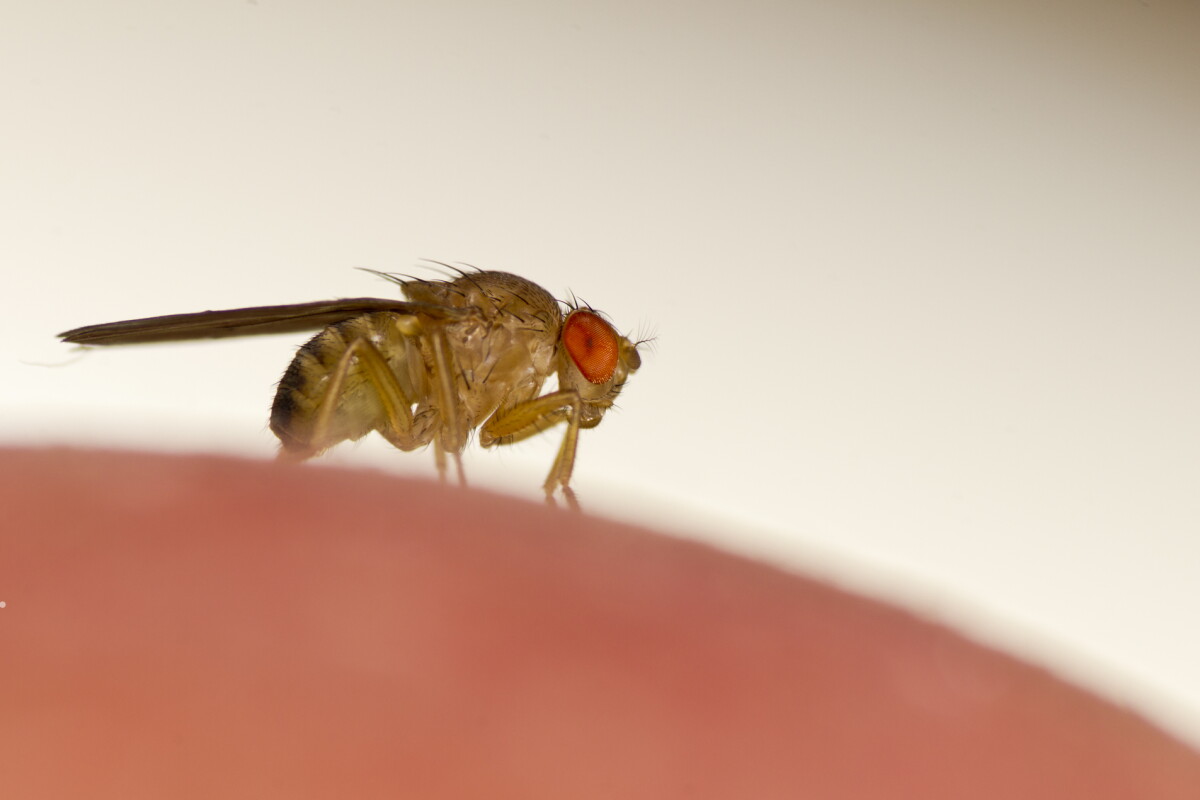
A new study has made fruit flies that are essentially remote-controlled
Depositphotos
VIEW 2 IMAGES


Researchers at Rice University have shown how they can hack the brains of fruit flies to make them remote controlled. The flies performed a specific action within a second of a command being sent to certain neurons in their brain.


The team started by genetically engineering the flies so that they expressed a certain heat-sensitive ion channel in some of their neurons. When this channel sensed heat, it would activate the neuron – in this case, that neuron caused the fly to spread its wings, which is a gesture they often use during mating.

The heat trigger came in the form of iron oxide nanoparticles injected into the insects’ brains. When a magnetic field is switched on nearby, those particles heat up, causing the neurons to fire and the fly to adopt the spread-wing pose.

To test the system, the researchers kept these engineered flies in a small enclosure atop a magnetic coil, and watched them with overhead cameras. And sure enough, when the magnetic field was switched on, the flies spread their wings within about half a second.


A diagram illustrating how the system works
C. Sebesta and J. Robinson/Rice University

“To study the brain or to treat neurological disorders the scientific community is searching for tools that are both incredibly precise, but also minimally invasive,” said Jacob Robinson, an author of the study. “Remote control of select neural circuits with magnetic fields is somewhat of a holy grail for neurotechnologies. Our work takes an important step toward that goal because it increases the speed of remote magnetic control, making it closer to the natural speed of the brain.”

The team’s direct goal is to use this kind of technology to restore some sight to patients with vision impairments. By stimulating the visual cortex, they might be able to essentially bypass the eyes. Similar techniques have been used to control the movements of mice, which could lead to better treatments for mobility issues with their root causes in the brain.


DARPA, who is funding the project, has different plans. Ultimately it wants to develop a headset that can read the neural activity in one person’s brain and then write it to another brain, basically transferring thoughts or perceptions between people. You’d be forgiven for finding that concept a bit spooky.

The research was published in the journal Nature Materials, and the remote-controlled flies can be seen spreading their wings in the video below.

Magnetic control of select neural circuits

Source: Rice University
https://newatlas.com/science/fly-brains-hack-remote-controlled/?fbclid=IwAR1s6cD1IG67D4-J48fCTLfGSiehE67afZoPklJqRZNWNst4Enr31j6ShW8

Quantum Digits Unlock More Computational Power With Fewer Quantum Particles

Quantum Digits Unlock More Computational Power With Fewer Quantum Particles

Innsbruck Quantum Computer

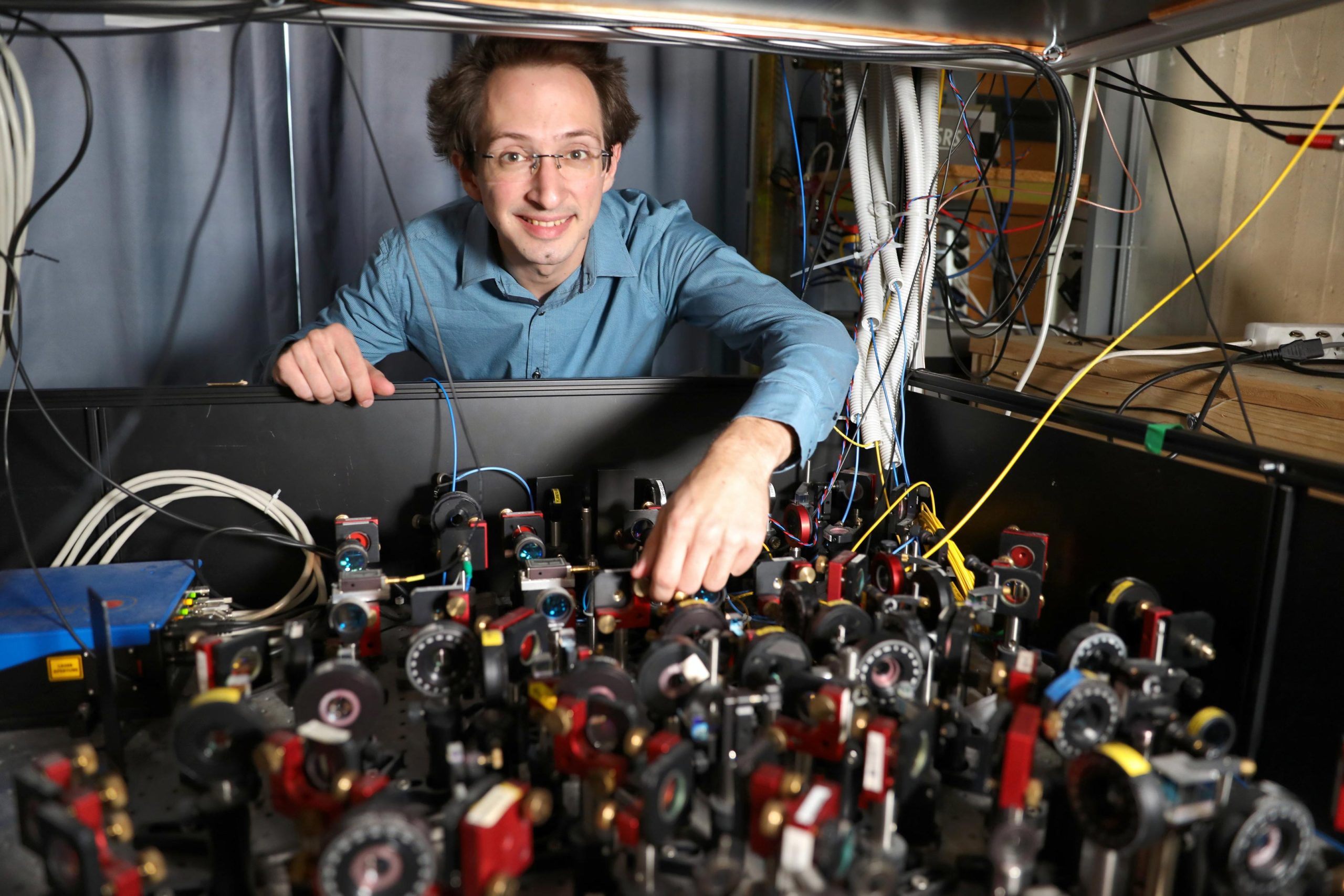
The Innsbruck quantum computer stores information in individual trapped calcium atoms, each of which has eight states, of which the scientists have used up to seven for computing. Credit: Uni Innsbruck/Harald Ritsch

Quantum Computer Works With More Than Zero and One

As we all learn from early on, digital computers work with zeros and ones, also known as binary information. This approach has worked well. In fact, it has been so successful that computers now power everything from coffee machines to self-driving cars and it is difficult to imagine a life without them.

“Working with more than zeros and ones is very natural, not only for the quantum computer but also for its applications, allowing us to unlock the true potential of quantum systems.” — Martin Ringbauer

Building on this incredible success, today’s quantum computers are also developed with binary information processing in mind. “The building blocks of quantum computers, however, are more than just zeros and ones,” explains Martin Ringbauer, an experimental physicist from Innsbruck, Austria. “Restricting them to binary systems prevents these devices from living up to their true potential.”

A team of scientists has now succeeded in developing a quantum computer that can perform arbitrary calculations with so-called quantum digits (qudits), thereby unlocking additional computational power with fewer quantum particles. This group is led by Thomas Monz at the Department of Experimental Physics at the University of Innsbruck.

Quantum systems are different

Storing information in zeros and ones is not the most efficient way of doing calculations, but it is the simplest way. Simple typically also means reliable and robust to errors, which is why binary information has become the unchallenged standard for classical computers.

Martin Ringbauer

Quantum physicist Martin Ringbauer in his lab. Credit: Uni Innsbruck

However, the situation is quite different in the quantum world. For example, in the Innsbruck quantum computer, information is stored in individually trapped Calcium atoms. Each of these atoms naturally has eight different states, of which only two are usually used to store information. Indeed, almost all existing quantum computers have access to more quantum states than they actually use for computation.

A natural approach for hardware and software

The physicists from Innsbruck now designed a quantum computer that can make use of the full potential of these atoms, by computing with qudits. Contrary to the classical case, using more states does not make the computer less reliable in this instance. “Quantum systems naturally have more than just two states and we showed that we can control them all equally well,” says Thomas Monz.

On the flip side, many of the tasks that need quantum computers, such as problems in physics, chemistry, or material science, are also naturally expressed in the qudit language. Rewriting them for qubits can often make them too complicated for today’s quantum computers. “Working with more than zeros and ones is very natural, not only for the quantum computer but also for its applications, allowing us to unlock the true potential of quantum systems,” explains Martin Ringbauer.

Reference: “A universal qudit quantum processor with trapped ions” by Martin Ringbauer, Michael Meth, Lukas Postler, Roman Stricker, Rainer Blatt, Philipp Schindler and Thomas Monz, 21 July 2022, Nature Physics.
DOI: 10.1038/s41567-022-01658-0

Source: https://scitechdaily.com/quantum-digits-unlock-more-computational-power-with-fewer-quantum-particles/

AI can see things we can’t – but does that include the future?

AI can see things we can’t – but does that include the future?

In 2020, three academics from the University of Science and Humanities in Lima, Peru, published a paper in which they claimed that artificial intelligence (AI) could already predict terrorist attacks with a reasonable degree of efficiency.


A perusal of the paper, featured in the International Journal of Advanced Computer and Science Applications, proved somewhat disappointing. The data cited barely seemed to tally with the claims being made by the authors – that AI predictive models known as “decision trees” matched real-life records of terror attacks around the world between 1970 and 2018 by type and region with just under 80% accuracy.


And yet, my curiosity was piqued. Could we really be on the threshold of a predictive future – one where machine learning crunches the numbers for us to turn our historical data into the digital equivalent of a crystal ball? I decided to try and find out.


Seeing through a glass, darkly


“I believe this is not something new and that military intelligence has been developing algorithms and processes for this for many years,” Dr Jorge Sosa Lopez, professor of engineering at CETYS university in Baja California, Mexico, tells me. “As long as the data is available and the algorithms are developed then it is possible, albeit with a certain level of error.”


This margin for error widens considerably between predicting, say, when the next hurricane might strike the Caribbean and whether or not one country will invade another.

“The data fundamentals are very similar [...] however, the difference lies in the fact that natural disasters follow natural laws that may be referenced with scientific principles and theories,” Dr Lopez explains. “Whereas socio-political events follow human behavior, which is more difficult to model or predict.”


This does not mean it is impossible, he stresses. But the task of mapping major events that arise directly from human action and interaction is “much more complex, because of the various scenarios a decision might create, and how said decision is influenced by state of mind as well as the cultural, educational, and religious framework of a person – or group of people, which makes the process even more complex.”


For Dr Lopez the question is not so much whether machine learning can predict future outcomes, but rather how accurate its predictions are. In other words, if AI really is a crystal ball, it is for now a glass we see through darkly.


Past, present, and future


Dustin Radtke, chief technology officer at AI-driven solutions provider OnSolve, seems confident that intelligent machines are on course to take the dark glasses off within our lifetimes.


He does have an interest in suggesting this: the company he represents uses machine learning to sift through reams of data about potentially harmful incidents as they occur throughout the world, so they can deliver their 30,000-strong client roster – which straddles the public and private sectors and includes businesses, government departments, and church congregations – a timely heads-up whenever they might be at risk.


“Being able to identify what happened in the past – that's easy to do,” he tells me. “It's not just what happened, but what's happening right now, the impact, and what's trending. You may know that a weather disaster is happening, because those are reported heavily in the news. But what you may not know is there's a protest happening right now, and where protests start to get more violent based on different criteria. And this is where AI can start to come in.”


Radtke clarifies further: “A protest in regions with certain dynamics will have a higher propensity to become violent – that's a way to predict actions that you need to take, based on a suspected outcome.”


At this point I start to feel a bit uncomfortable. This definitely feels like we’re straying into Minority Report, a sci-fi movie based on the Philip K Dick short story that sees a futuristic policeman arresting people for crimes they have not yet committed but likely will in the future. True, if police target a certain neighborhood based on its previous data, it might allow them to prepare in advance for civil unrest that could cause damage to local homes and businesses – but it also sounds dangerously close to racial profiling and the like.


"A protest in regions with certain dynamics will have a higher propensity to become violent - that's a way to predict actions that you need to take, based on a suspected outcome."


Dustin Radtke, CTO of OnSolve

“What we focus on is augmented intelligence for humans to take action [on],” says Radtke when I raise this concern. “We are not prescribing the action to be taken based on the insights that we get – we're trying to make sure that the human has all the necessary intelligence to drive the behavior that they need to drive. We're reporting facts back – this actually happened here, this is what has happened in the past – and you can take action based on that. It's all about driving improved safety for everyone in that area.”


When I press him on the possible human rights concern and the inevitable pushback that will arise if AI is routinely used to pre-emptively police areas deemed as problematic, he answers: “I think that with every technology that's ever been out there in history there is always a way to use it for non-good. I think you have to focus on the good that it can provide and make sure that you police the non-good behavior that could happen from it.”


This will entail some sort of oversight. “There are consortiums out there to help drive the ethical adoption of AI throughout the industry – we definitely keep aware of those. But I think people have to look back, it's not just an AI problem – that is a continual problem as you innovate across every sector and industry.”


Ethics and geopolitics


The Alan Turing Institute defines AI ethics as a “set of values, principles, and techniques that employ widely accepted standards of right and wrong to guide moral conduct in the development and use of AI technologies.”


Its 2019 report on the ethical issues facing the AI industry highlights discrimination and bias as a significant obstacle to the equitable application of machine-learning technology.


“Because they gain their insights from the existing structures and dynamics of the societies they analyse, data-driven technologies can reproduce, reinforce, and amplify the patterns of marginalisation, inequality, and discrimination that exist in these societies,” it says. “Likewise, because many of the features, metrics, and analytic structures of the models that enable data mining are chosen by their designers, these technologies can potentially replicate their designers’ preconceptions and biases.”


Such biases will naturally have wide-ranging implications, as different nation-states vie with one another to see who comes out on top in the ‘AI arms race.’ Radtke agrees that geopolitics will play a major part in the development of machine-learning solutions, and that this will see rival powers squaring off against one another in what amounts to a global game of digital chess. In the run-up to Russia’s invasion of Ukraine, he tells me, OnSolve had early indicators of an escalation in hostilities, most notably the growing number of political protests that AI was able to track and map.


“In the Ukraine we started to see heightened activity well before the Russian invasion happened,” he says. “We were seeing maybe 30 to 40 events a day that would impact our customer facilities, and that slowly started to increase. Closer to the actual invasion, we're seeing up to 1,200 risks that deal more with military events. And as you start to see that, you take more proactive measures.”


I ask Radtke if he foresees a global escalation between state-backed actors, each one trying to use its own AI to neutralize or compromise that of its rivals.


"In Ukraine we started to see heightened activity well before the Russian invasion happened. Closer to the actual invasion, we're seeing up to 1,200 risks that deal more with military events. And as you start to see that, you take more proactive measures."


Dustin Radtke, CTO of OnSolve

“For sure,” he replies. “You're always going to have to identify the bad actors. There's obviously proof that there has been some manipulation of the [2016] election in the US that was partially driven by AI. You have to make sure that you're focusing on identifying that so you can create counter attacks on the positive side. How is that good going to outweigh that bad profiling? And how do you interact and account for the bad actors and insights that you're actually creating? Which is exactly why we focus on vetted data sources. There are so many Twitter feeds, and you start to see bots being identified out there. You can't always trust the information you're provided with.”


Given what happened in the run-up to the US ballot with data-mining company Cambridge Analytica – which helped the Trump campaign to win by profiling voters based on their interaction with Facebook – does Radtke worry that AI has the potential to throw future elections completely? “I wouldn't say it's going to throw it, but it could definitely have an influence,” he concedes.


AI’s quantum leap

Meanwhile, the data available to machines is set to grow exponentially with the advent of quantum computers, capable of processing at a vastly accelerated rate. The National Institute of Science and Technology recently named four algorithms capable of withstanding a quantum-driven cyberattack, while tech research firm NVIDIA has heralded a new platform that will allow the supercomputers to work with their slower counterparts.


“I think where it all comes into play is speed,” says Radtke when I ask him about the impact quantum computing will have on AI-driven machine learning. “How fast can you disseminate all the information and intelligence and do all the correlation necessary? The more processing available to you, the faster it's going to be. The faster you get insights, the faster people can take action.”


Not only that, but supercomputers will much more quickly be able to determine what data is relevant to a given situation, and what can be discarded. “If you give me a million pieces of information very fast, but only two pieces are relevant, it does me no good,” Radtke explains. “The power will give you that speed, paired with the relevance. Because relevance requires ground truth – ground truth requires corresponding sources of information, providing that context so that you feel comfortable that what you're reporting is true. If you look at what we were thinking five years ago, [it was] purely: ‘Can I report on what's happening?’ But now we've got the treasure troves of information – can I start to use that data to be more predictive? That's what the power is really going to give us.”


Source: https://cybernews.com/editorial/ai-can-see-things-we-cant-but-does-that-include-the-future/


New intelligent material could become a “quantum brain”

 New intelligent material could become a “quantum brain”

This new material could be the foundation of future computers and a “quantum brain.”

Scientists created an intelligent material that acts as a brain by physically changing when it learns. This is an important step toward a new generation of computers that could dramatically increase computing power while using less energy.

Artificial intelligence imitates human intelligence by recognizing patterns and learning new things. Currently, it is run on machine learning software. But the “smarter” computers get, the more computing power they require. This can lead to a sizable energy footprint, which could destabilize the computer.

In the last seven years, computer usage has increased by 300,000-fold. Since 2012, the amount of computing power used to train the largest AI models has doubled every 3.4 months, the MIT Technology Review reports. And, the escalating costs of deep learning, can have environmental costs too. Researchers at the University of Massachusetts, Amherst, found that a common large AI model emits more than 626,000 pounds of carbon dioxide in its lifetime, nearly five times that of the average American car.

‘It is clear that we have to find new strategies to store and process information in an energy-efficient way,’ said Alexander Khajetoorians, Professor of Scanning Probe Microscopy at Radboud University.

So, Khajetoorians and his team of physicists at Radboud University in the Netherlands looked for a special kind of hardware that could accomplish the same level of intelligence without needing energy-zapping software.

In a paper published in Nature Nanotechnology, the team showed that they could create hardware out of an ensemble of interconnected cobalt atoms on black phosphorus. This atom network creates an intelligent material that can pattern and connect like brain synapses, which allows it to learn without any AI software.

How It Works

Neurons in our brains send signals to create computations, converting incoming data into action. The team’s material was designed to imitate this biology, allowing it to store and process information.

The cobalt atoms have special distinctive spin states.  The team demonstrated that they could embed data inside the spin states of these atoms. Then by applying voltage, they could simulate a neuron firing and change state.

These neurons didn’t have to remember complex information like how to identify endangered elephants from space or what the hum of the universe sounds like. Instead, they had one job —  remember binary information in the form of 0s and 1s. When the neuromorphic neurons fire, the atoms shifted between a state of 0 and 1. When the researchers applied voltage for an extended period, the material adapted its reaction over time. It learned by physically changing itself.

“When stimulating the material over a longer period of time with a certain voltage, we were very surprised to see that the synapses actually changed. The material adapted its reaction based on the external stimuli that it received. It learned by itself,” said Khajetoorians.

This is an important step toward achieving a “quantum brain,” which models the function of a brain with the motion and interaction of subatomic particles.

Next Steps

Before they build an entire computer with smart material, Khajetoorians says they first need to understand how it works so that they can fine-tune its behavior. Their next step is to scale up the material, building larger ensembles of atoms, and demonstrate that the system not only operates in pieces but as a whole. In the future, if they could make an entire computer out of this intelligent material, then the self-learning machine would be smaller and more energy-efficient than computers with the same capabilities today. 

Source: https://www.freethink.com/technology/intelligent-material?utm_term=Autofeed&utm_campaign=echobox_freethink&utm_medium=Social&utm_source=Facebook&fbclid=IwAR3KnIVMMxUscOIwvJPRXLmOqwMNQ0I6zHNwmPNbVAw2sEwydi6U1ui6BBk#Echobox=1657735086