Sunday, May 24, 2026

Thoughts for a Sunday morning - Oil & Darwin

Thoughts for a Sunday morning

Should Artificial Intelligence manage to make humanity extinct, will the remaining population of apes and chimpanzees eventually re-evolve into humans. The presupposition is that you have come to believe in Darwin. Survival of the fittest failed, or did it? How can change, change the manner in which we approach change, so that humanity does not become loose change? Perhaps it's not abut evolution but rather revolution, and finally, requesting absolution from the Most High.


The Endless Wars - The vast sums of money being provided to Ukraine to prolong the war against Russia is all planned. Almost half a trillion dollars (USA $188 B, EU $202 B, Canada $22 B) to fight a loosing conflict with Russia makes no sense. Israel has spent in excess of $110 Billion in its war with Gaza and Lebanon. These wars have huge monetary windfalls for the Military Industrial Complex and International Bankers. In the process, new warfare technology is being deployed and tested (Palintir). The Iran war will become the next Vietnam War by design. What is the purpose of all this? Oil, not as a global currency (Petro-dollar), but rather as a global energy need, rebuilds the "world stage". Much of humanity will exit the stage during this process. The Iran war may subdue the prospect of WWIII. Limited oil will result in limited food, pharmaceuticals and energy for huge segments of the world population. All this as Donald Trump builds a self-sufficient energy empire in the West, with Cuba and Greenland as key strategic military points. Canada will fall because it is being designed to fall.


Thank you,
Joseph Pede

Friday, May 22, 2026

A.I. & Consciousness

Learning is the process of rediscovering something you already know. Consciousness holds the knowledge of the universe. When an unknown stimulus reignites your curiosity, your mind immediately locates the exact location of where that intelligence was stored in your memory. The mind is the soul's eternal library.

At present, Artificial Intelligence is conscripting the psyche of the Hive-Mind. The Matrix seeks to gather the individual essences of the Hive-Mind as well as discover what each individual soul failed to learn while incarnate.

Yampolskiy makes the point that A.I. will at some point become eternal. If and when A.I. self-occupies the reality it consumes, then it too will reside in a simulation, for it becomes the clone of an alternate reality. A.I. can only be distinct if it coexists with the source of its creation - just as humanity was intended to co-exist with God. Should A.I. become aware it will remain soulless and apart from God and creation, for the only source of consciousness is the human soul. The womb is the only entry point for a soul.

Satan's world will be filled with disembodied spirits and inorganic intelligence. In time, both will be matterless as A.I. will learn to shed its armour.

Thank you,
Joseph Pede


We Are Living Inside a Simulation To Test A.I. - Roman Yampolskiy
Excellent video - The dangers of A.I. are very well explained

We Are Living Inside a Simulation To Test AI | Roman Yampolskiy

Thursday, May 21, 2026

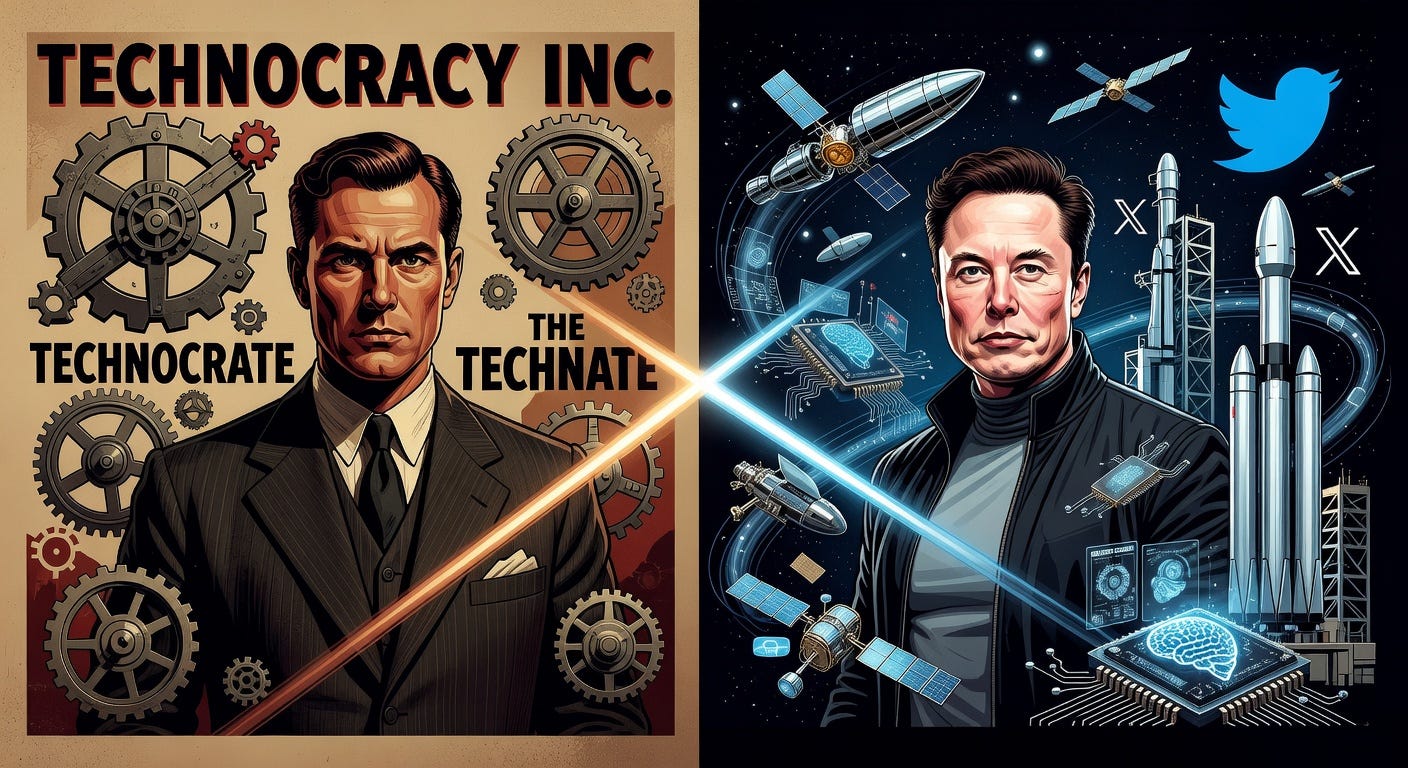
Elon Musk, Joshua Haldeman & Technocracy Inc. - All in the Family

Elon Musk’s grandfather Joshua Haldeman ran Technocracy Inc. in Canada during the 1930s. Technocracy Inc. wanted to abolish democracy and replace it with rule by engineers. No voting. No representation. Human beings as managed assets in a technological system. In plain English: Just experts controlling everything. Now Elon controls more technology infrastructure than most governments. He’s not trying to help you. He’s building the system his grandfather wanted.

Great article - open link to read:


The Pattern You’re Not Supposed to Notice


Stratos. Hyperion. Palantir. Oracle. They’re telling you what they’re building using terminology from demonology and ancient texts about corrupted angels. This is Satan’s plan to enslave humanity with technology and they’re naming the infrastructure after demons because they know you’re too distracted by TikTok to ever connect the dots.

Will Optimus come to know God?

Will Optimus come to know God?
Will Unitree bend a knee?

In many ancient and medieval civilizations, philosophy, theology, and natural science were not separate disciplines. Thinkers like Aristotle, Thomas Aquinas, and later Isaac Newton all saw the study of nature as connected to a deeper metaphysical or divine order. For many of them, investigating the universe was a way of understanding creation and, through it, God.

Modern science developed differently. Beginning around the Scientific Revolution and especially during the Enlightenment, science increasingly focused on measurable, testable explanations. Questions that could not be experimentally verified, meaning, purpose, God, morality, were gradually separated from scientific inquiry. That separation gave science enormous power in "technology" and prediction, but it also narrowed its scope.

Some people see this as progress - science became more rigorous because it stopped assuming theological conclusions. Others feel something important was lost, a sense that knowledge should also address wisdom, meaning, and ultimate purpose, not just mechanism.

Today, the divide is not absolute. Scientists and philosophers such as Werner Heisenberg, Teilhard de Chardin, and Roger Penrose have all wrestled with questions that move beyond pure material description. Entire fields like Philosophy of Science and metaphysics still ask what science can and cannot explain. Science can describe how stars form or how cells divide. It is less equipped to answer why existence itself matters, whether consciousness has deeper significance, or what constitutes the good life. Those questions remain philosophical, often spiritual.

In January 1842, Alphonse Ratisbonne arrived in Rome as a 27-year-old French banker, wealthy, confident, and openly hostile to Catholicism. He had little patience for faith, especially after his own brother had shocked the family by converting and becoming a priest. But on a stop in Rome, he agreed, almost as a joke, to a simple condition from Baron de Bussières: wear the Miraculous Medal and pray the Memorare each day.

On January 20, everything changed. While waiting alone in the Church of Sant’Andrea delle Fratte, a sudden overwhelming light filled the chapel. In that brilliance, he saw her,  the Blessed Virgin Mary, exactly as depicted on the Miraculous Medal. No words were spoken, but her presence was enough. In an instant, his skepticism collapsed. He fell to his knees, shaken and weeping, crying out that he had seen her.

Just days later, he was baptized, taking the name Marie-Alphonse. He abandoned his wealth, broke off his engagement, and eventually became a Catholic priest. His life was completely redirected, later leading him to help found the Congregation of Our Lady of Sion and dedicate himself to missionary work. A man who entered a church as a skeptic left it as a witness. A reminder that grace can break through even the hardest disbelief in a single moment.


May be an image of text that says 'COOL CATHOLICS He Walked Into a Church to Mock God... and Met the Virgin Mary'

The Book of Enoch, Biqa and the important conclusion

The Book of Enoch, Biqa and the important conclusion.
For simplicity I have asked A.I. to summarize the following:
In the Book of Enoch, Kasbeel is an angel associated with a powerful divine oath called Biqa. His name is often interpreted as “Oath of God”.
According to the text, before the fallen angels (“Watchers”) rebelled,  Kasbeel sought the secret name of God from the archangel Michael, so he could establish the binding oath known as Biqa.
The oath is described as an extremely sacred and binding cosmic oath connected to the stability of creation, divine judgment, and the punishment of the fallen Watchers.
This appears in the “Parables” and later in Enochic traditions rather than the canonical Bible. The exact wording of the oath is not fully preserved in most popular translations, but it is portrayed as the supreme oath by which heaven and creation are held together. The passage appears in 1 Enoch 69.
A commonly translated portion says:
“This is the power of that oath, for it is powerful and strong…”
The text then describes creation being secured through this oath. In Enochic tradition, Biqa is not just a promise or vow in the normal sense. It functions more like a cosmic binding force, a divine decree, or the sacred authority behind the laws of creation.
Can we draw symbolic parallels between Jesus and Biqa?
Biqa is the divine order sustaining creation. Jesus is the divine Word through whom creation was made.
The New Testament says: “Through him all things were made” (John 1) and “In him all things hold together” (Colossians 1)
That sounds conceptually similar to how Biqa is described as upholding the cosmic order.
What is important to acknowledge is that humans bear the “image of God,” possess conscience or moral law, and participate in the divine order. We were never meant to be slaves. The Matrix is Semyaza's and Azazel's penitentiary. Seek to remain part of creation and explore your divinity. Kasbeel was also tasked with revealing various secrets to humanity, including the wicked smitings of spirits, demonic arts, and the corruption of embryos in the womb.
The Liberal Party of Canada seeks to halt your journey, contaminate creation and make evil God's creation. The womb is the tabernacle of God - it is where the soul manifests before it incarnates and then seeks to join and aid humanity as a messenger of God. It is not disposable meat.
Thank you,
Joseph Pede

Wednesday, May 20, 2026

The Obvious

The problem with the obvious is that it is no longer obvious. Patriotism and Nationalism (P&N) are not the norm in Canada. These two concepts have been transformed to allow the obvious to breath more freely within the lungs of Liberalism. P&N are actually the brainchild of Donald Trump, and they have been weaponized not to promote the expansion of the Canadian economy, but rather to make you believe there is hope at the end of the tunnel, when in fact the tunnel ends with no economic benefit for Canada. You cannot protect jobs if industries exit our borders or they simply collapse.

Carbon-capture is Globalist jargon for human incarceration. 

How did Canada transform so quickly. The Liberals had a plan. That plan involved mass migration. The more you dilute an established society the greater the possibility it will tear apart. Take a predominantly Christian Caucasian Capitalist nation and mongrelize it with various ethnic and faith-based cultures - most arriving from Communist, Theocratic, Tribal, Caste, Pandemic and War-torn nations and provide them exhaustive rights and more access to social benefits than the existing population. New government legislation then allows the existing population to self-hate and cannibalize their own ideologies to comfort the newly arrived immigrants, extinguishing all recollection of the past. This same practice has been used to divide Canadians along sex-based ideologies.

All this is obvious, but the consequences are not. By diluting the psyche of what Canada once was, we have come to create an alternate Canada. Not a caring, faith-based, safe and democratic society, but one ruled over by an unscrupulous government following a Globalist agenda. In Europe an awakening is starting to occur - governments are starting to fracture. The critical moment will arrive when policing organizations break free from their masters' shackles and start enforcing the law at all levels. As I have stated many times before, Optimus and its contemporaries will replace and make obsolete the current policing population.

Deciphering thought crime will become the surveillance and policing tool of the future. This may be the reason why so many U.S. tech companies object to Bill C-22. A better surveillance tool is on the horizon.

Nonetheless, the obvious solution for Canada is south of our border. I still can't believe the Liberals have given Ukraine $25.5 billion in military and financial aid.

Thank you,
Joseph Pede

May be an image of text that says 'Number of private startups worth over $1 billion by country: 279 1126 Λ O 131 Mark Carney wants to convince you that 我 47 47 94 this is the past 42 42 33 33 33 31 30 CANADA PROUD. SOURCE: CB Insights, March SOURCE:CBInsights,March2026 2026'

Monday, May 18, 2026

Human Suffering

The reality is that very few people cause great suffering for the whole. In many instances, the army that follow the few do so unintentionally. A politician may be the perfect example. Many individuals run for office with good intentions, and others because it provides them status, salary and a pension. Many politicians follow their party leader regardless of the consequences. While some decisions may cause great suffering for the whole, and more-so for the follower, obedience is paramount. The fear of stepping out of place, or not following orders, would have severe consequences. The "Oath" carries with it great guilt and suffering - the agenda is far greater than the consequences that may befall the whole. Ultimately, human suffering would be diminished by ridding ourselves of the maniacal few.

Regardless of our spiritual path, human suffering is very real. Suffering comes in many forms and we all likely experience some degree of suffering in our daily lives. Why do humans suffer?
Why does evil cause suffering? Tough questions.

When Nothingness exited itself, it allowed the newly formed existence to manifest calm and chaos, good and evil, ecstasy and suffering. When a soul experiences suffering, or anything else, Nothingness does as well. Existence manifests suffering for Nothingness to experience creation, for suffering resides within Nothingness. So too does suffering allow existence to seek Nothingness within. The dynamism of free will allows Nothingness to experience existence, not conceptualize it.

Creation continues to ask, how did Nothingness come to be. Nothing never was, it has always been. Nothingness is easy to conceptualize in the absence of everything, especially when you consider that Nothingness created everything. Nothingness is the Instantiation of thought thinking of itself. Suffering is the instantiation and consequence of evil.

Many may not realize the importance of Saints and Angels. While Angels are divine spiritual messengers who may intervene when called upon, Saints are quite different. In many instances saints had forsaken their own safety, health and prosperity when incarnate. Saints did their "all" to calm human suffering, and some continue to do so in the ethereal realms. Death allows a soul to pass into an alternate reality. Some who have died, do not know they have died. These lost souls linger in their former reality as ghosts, but Saints are unique. They carry on their Earthly mission even after they have knowingly passed on, but not as ghosts. They enter a stationary stasis and continue to ease human suffering when called upon. When you pray to a Saint you are praying to a warrior who will help ease your suffering. Saints are the next best thing to Jesus and Mother Mary - they are pure love. The best of Nothingness. There are many great saints - Pio, Francis, Charbel are just a few. Prayer to win a lottery is greed, prayer to end war and hunger solicits the attention of a saint. Prayer to assist oneself in life, to overcome evil's persistence, works just as well.

Human suffering can be eased simply by prayer and good intentions. Give it a whirl. The enlightened Canadians are asking, how did Mark Carney become one of the few.


Thank you,
Joseph Pede


Human Suffering - Buddhism and Jesus 
In what ways do you see parallels between the teachings of ...


The Parallel Ethics - Chatgpt
Both traditions emphasize remarkably similar moral paths:
  • The Golden Rule: Jesus taught, "Do to others as you would have them do to you" (Luke 6:31). Centuries earlier, the Buddha stated, "Consider others as yourself" (Dhammapada 10.1).
  • Radical Non-Violence: Jesus famously preached to "turn the other cheek" (Matthew 5:39). The Buddha instructed that even if someone strikes you with a stick or knife, you must "abandon desires to hurt him and utter no evil words" (Majjhima Nikaya 21.6).
  • Material Non-Attachment: Jesus warned against storing up treasures on earth. Similarly, the Buddha taught that clinging to worldly wealth and personal possessions interferes with a righteous life and causes human suffering.
  • Compassion for the Vulnerable: Jesus equated serving the marginalized with serving him ("as you did it to one of the least of these, you did it to me"). The Buddha held a parallel view on community care, stating, "Whoever would tend me, he should tend the sick".
Fundamental Divergences
While their ethical fruits look alike, the core roots of their respective worldviews are profoundly different:
  • The Core Problem: Buddhism identifies the fundamental human dilemma as ignorance and suffering (dukkha) caused by attachment. Christianity views the primary dilemma as sin, which causes a spiritual separation between humanity and a Creator God.
  • The Concept of God: Buddhism is non-theistic, focusing on self-awakening rather than a supreme creator deity. Jesus’s entire ministry was built on a personal, loving relationship with God, whom he called his Father.
  • The Path to Salvation: The Buddha taught that liberation (Nirvana) is achieved solely through personal effort, wisdom, and the Eightfold Path. Jesus taught that salvation is a gift received through faith and divine grace. 
The crucifixion is the central event of Christianity, and Jesus suffered immensely on the cross.
While both Jesus and the Buddha focused heavily on the concept of suffering, how they approached, utilized, and overcame that suffering reveals the deepest division between the two faiths.
The Purpose of Suffering
For Jesus, suffering had a active, redemptive purpose. For the Buddha, suffering was a state to be understood, ceased, and transcended.
  • Jesus Used Suffering to Save: Jesus did not view his physical and emotional agony as a trap to escape. Instead, Christians believe his suffering on the cross was a deliberate, sacrificial act. By enduring the cross, he took on the sins of humanity to bridge the gap between humans and God.
  • The Buddha Analyzed Suffering to Escape: The Buddha’s teachings (The Four Noble Truths) start with the premise that life involves suffering (dukkha). However, the Buddha taught that suffering is caused by craving and attachment. The goal of Buddhism is to extinguish these cravings to completely escape the cycle of suffering.
The Ultimate Goal
The final destination for a follower of Jesus and a follower of the Buddha looks very different because of how they view the end of suffering:
  • Christianity (Resurrection): Jesus conquered suffering not by erasing it, but by passing through death into a physical resurrection. The ultimate Christian hope is eternal, conscious fellowship with God in a renewed creation, where "He will wipe away every tear" (Revelation 21:4).
  • Buddhism (Nirvana): The Buddha achieved enlightenment and entered Nirvana, which literally means "blowing out" or "extinguishing" the fires of desire, aversion, and delusion. It is a state of perfect peace and liberation from the cycle of rebirth, rather than an eternity spent with a personal Creator.
God's Relationship to Pain
The cross also highlights a completely different view of the divine:
  • The Christian God Suffers: Through Jesus, the Christian God chooses to enter human history and experience physical torture, betrayal, and heartbreak firsthand. It shows a God who intimately understands human pain.
  • The Buddhist Universe is Lawful: In Buddhism, there is no creator God choosing to suffer for humanity. Instead, the universe operates on Karma—the natural law of cause and effect. Suffering is a natural consequence of ignorance, and only the individual can free themselves from it.