Extraterrestrial Mineral Harder than Diamonds Discovered in Israel
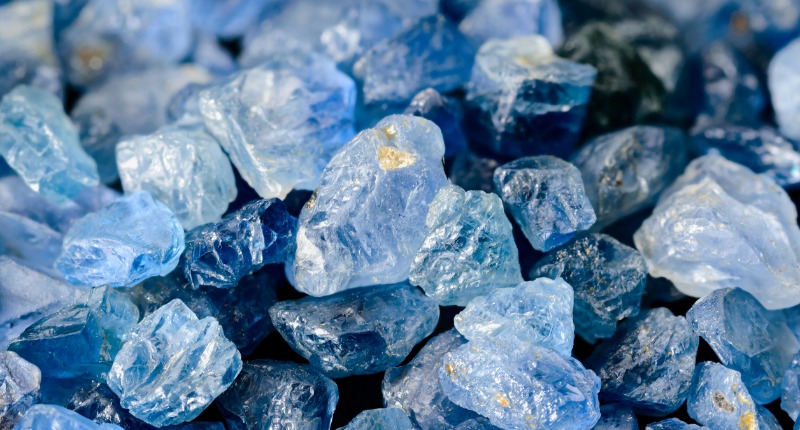
A new discovery in the mountains of northern Israel has caused significant excitement for geologists around the world. While working in the Zevulun Valley, close to Mount Carmel, Israeli mining company Shefa Yamim found a new mineral never before discovered on earth.
The International Mineralogical Association regularly approves new minerals for its official list, with up to 100 new substances added to the register each year.
However, this latest discovery was hailed as a significant event, as it was previously believed that this type of mineral was only found on extraterrestrial material.
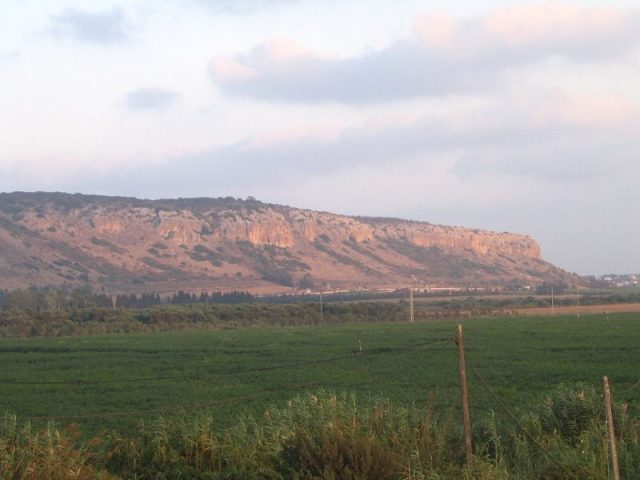
Mount Carmel
The new mineral loosely resembles allendeite, a mineral previously seen on the Allende meteorite that fell to earth in February of 1969. However, this is the first time that such a substance has been found to naturally occur in rock on Earth itself.
The CEO of Shefa Yamim, Abraham Taub, told Haaretz that the mineral had been named carmeltazite, after the place of its discovery and the minerals contained within its structure: titanium, aluminum and zirconium.
While the majority of the new minerals approved by the International Mineralogical Association are unspectacular in appearance, carmeltazite offers considerable commercial opportunities, as it resembles other gemstones used in the making of jewelry.
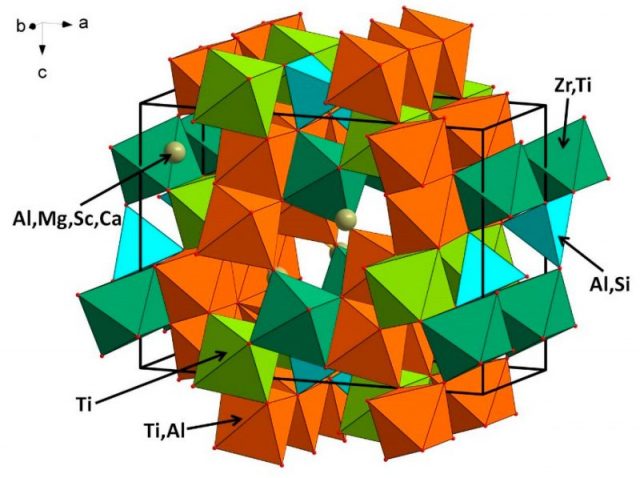
The crystal structure of carmeltazite. Photo by MDPI CC BY-SA 4.0
This strange new mineral was found embedded in cracks within sapphire, the second hardest mineral (after diamonds) found to occur naturally on earth.
Carmeltazite closely resembles sapphire and ruby in its chemical composition, and is found in black, blue-green, or orange-brown colors, with a metallic hue.
However, after density testing, scientists discovered that carmeltazite is even harder than diamond, and is significantly scarcer, making its value extremely high.
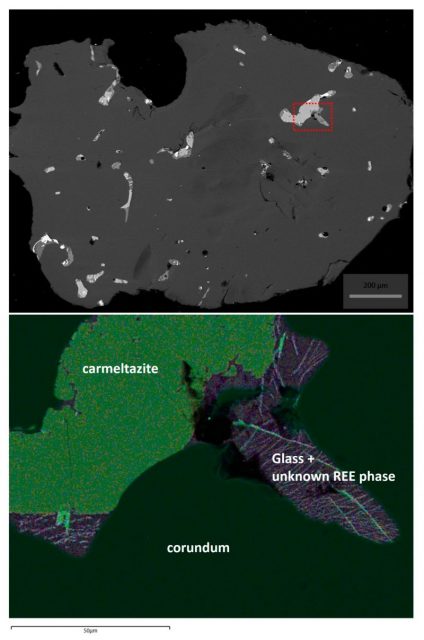
Photo by MDPI CC BY-SA 4.0
According to the BBC, the region close to the Savulun Valley is known for volcanic activity dating from the Cretaceous period. The Carmel range is home to at least 14 volcanic vents that created the geological conditions for the formation of carmeltazite, over extremely long periods of time.
According to Forbes, it is thought that carmeltazite formed 18 miles under the surface of the earth, close to the crust-mantle boundary. High pressure and temperatures produce partially molten rocks that release fluids and react to form new minerals.
As vents emerge in the surface of the earth, this volcanic matter is rapidly transported into the upper crust along with other materials, creating the type of deposits found in Mount Carmel.
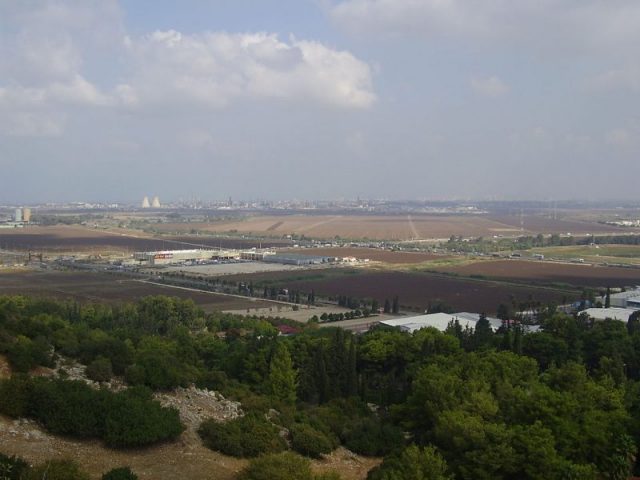
Zvulun Valley. Photo by user:netane CC BY-SA 3.0
The mining company has been working intensively in this region due to the possibilities offered by this rich geological legacy. Although they were principally looking for sapphire, the new mineral was discovered embedded in the gemstones they harvested from the rock, having formed in the cracks and fissures within the sapphire, a variety of corundum.
Although the mining company has recovered many samples, carmeltazite remains extremely rare. The largest stone discovered to date reached 33.3 carats.
Haaretz reports that the mineral has been trademarked by the mining company as “Carmel Sapphire” and it has recently been approved as a new mineral by the International Mineralogical Association’s Commission on New Minerals.
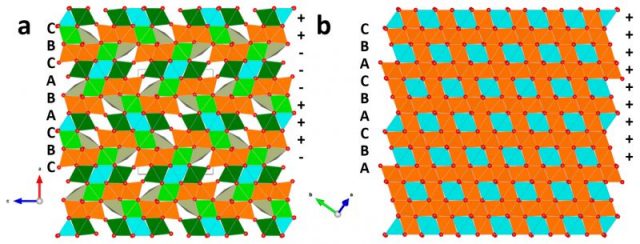
Photo by MDPI CC BY-SA 4.0
Although the Commission regularly approves new discoveries, it is unusual to find a substance so spectacular in appearance and quality, and a result, has attracted a significant amount of international attention.
To date, carmeltazite has only been discovered in the Zevulun Valley, which means it is one of the rarest minerals in the world, and is also likely to be one of the most expensive.
Daub stated that the company intends to market the mineral as a gemstone, and potentially use it in the production of high-end jewelry. One thing is sure: this extraterrestrial mineral is likely to command a monumental price tag when it eventually hits the market.
"What is the significance of Mount Carmel in the Bible?"
Answer: Rather than being a single mountain, Mount Carmel is actually a high, wooded mountain ridge. In the Bible, Mount Carmel is best known as the site of the prophet Elijah’s dramatic showdown with 850 pagan prophets.
Carmel means “vineyard,” “orchard,” or “garden” and reflects the fertile beauty of Mount Carmel’s picturesque slopes. The mountainous ridge starts on the Mediterranean coast in the northwest part of Israel at the south shore of the Bay of Acre. From there, the range runs southeast down to the plain of Dothan. Running along the northeast side of the ridge is the Valley of Jezreel. At its highest point, Mount Carmel reaches over 1,700 feet above sea level.
Most notably, Mount Carmel is the scene of a spectacular head-to-head confrontation between the false prophets of Baal and Asherah and the One True God of Israel. The episode takes place during one of Israel’s worst times of crisis under King Ahab. To please his wife, Jezebel, Ahab set up an altar to Baal at the top of Mount Carmel. Baal, the favorite deity of Jezebel, was reputed to be the god of rain and vegetation.
In 1 Kings 17:1–24, Elijah the Tishbite enters the story as an emissary of the Lord. The prophet confronts Ahab and predicts a drought in response to Ahab and Jezebel’s unholy devotion to Baal. When the end of the drought neared, to prove that the Lord God was the only true God, Elijah proposes a contest. All of Israel was summoned to Mount Carmel to witness the confrontation between Elijah and the false prophets of Baal and Asherah (1 Kings 18:19). The match would show whose god was able to send fire from heaven to consume their offerings. The prophets of Baal prayed all day and cut themselves violently to get Baal’s attention, but no one answered (verses 28–29).
By evening it was Elijah’s turn. He rebuilt the ruined altar of God that existed on Mount Carmel. He set the offering on top of the wood and then drenched the whole thing with water and prayed aloud: “LORD, the God of Abraham, Isaac and Israel, let it be known today that you are God in Israel and that I am your servant and have done all these things at your command. Answer me, LORD, answer me, so these people will know that you, LORD, are God, and that you are turning their hearts back again” (1 Kings 18:36–37). God answered with a spectacular display of fire from heaven, consuming the offering, licking up the sodden wood as well as every drop of water that had been poured over the altar. Even the rocks of the altar were consumed. The people fell on their faces, proclaiming, “The Lord, he is God; the Lord, he is God” (1 Kings 18:39). Elijah then ordered the people to execute the 850 false prophets according to the Mosaic Law (Deuteronomy 13).
It seems that the prophet Elisha later used Mount Carmel as a home base (2 Kings 4:25). From ancient times, Mount Carmel has been regarded as a holy place and a symbol of beauty and fertility. In the tribal divisions, Mount Carmel was part of the territory of (western) Manasseh. Like the region of upper Galilee, Mount Carmel received plentiful rainfall in biblical times, producing lush, beautiful forests and rich grasslands on the lower slopes suitable for grazing. Isaiah associates God’s glorious restoration of redeemed humanity with the “splendor of Carmel” (Isaiah 35:2). Solomon compares the head of his beloved with the beauty and nobility of Mount Carmel (Song of Solomon 7:5).
Sources:


No comments:
Post a Comment